UNIST site map
- Admissions
-
Academics
- Colleges and Schools
-
Academic Affairs
- Academic Calendar
- Academic Curriculum
- Requirements for Graduation
- Browse Open Courses
- Undergraduate Administration
-
Graduate Academic Affairs
- Tuition Fee Payment
- Academic Leave of Absence/ Academic Return
- Voluntary Withdrawal/ Expulsion
- Change of Major
- Change of Degree Program/ Dropping of Degree Program
- Class Period/ Attendance Period/ Academic Year・Semester
- Course Registration
- Course Drop
- Attendance/ Grade/ Exam
- Credit Transfer/ Credit Carryover
- Academic Forms
- Education Support
-
Research/Industry
- Research Aims
- Research Findings
- Researcher Search
-
Research Organizations
- UNIST Multi-Interdisciplinary Institute
- IBS Research Groups
-
UNIST Labs
- Department of Mechanical Engineering
- School of Energy and Chemical Engineering
- Department of Civil
- Department of Materials Science and Engineering
- Department of Nuclear Engineering
- Department of Industrial Engineering
- Department of Design
- Department of Biomedical Engineering
- Department of Biological Sciences
- Department of Electrical Engineering
- Department of Computer Science and Engineering
- Department of Mathematical Sciences
- Department of Chemistry
- Department of Physics
- School of Business Administration
- Graduate School of Carbon Neutrality
- Graduate School of Artificial Intelligence
- Research Support
- University-Industry Relations
- Campus Life
- News Center
- About UNIST
-
etc
- UNIST Bulletin
- Work-Life Balance Support System
- UNIST Gender Equality Plan
- Faculty Invitation for Tenure Track
- Faculty Invitation for Non-Tenure Track
- Board Meeting Minutes
- University Council Meeting Minutes
- Administrative Service Charter
- Privacy Policy
- Copyright Policy
- Rejection of Unauthorized Email Collection
- Operation and Management Policy for Video Information Processing Devices
- Information Disclosure


Connection Points of Knowledge, Everything About UNIST
Try searching.
Recommended search terms


- portal
- U Academics Innovation Center
- Leadership Center
- Dormitory
- Academic Information Center
- International Students Support
- Browse Open Courses
- Course Registration
- Graduation Requirements for Graduation
- Academic Leave of Absence/ Academic Return
- Military Service
- Certificate Issuance
- Academic Calendar
- Scholarships
- Campus Map
- Campus Life Guidebook
- Health Care Center
- Human Rights Center
- portal
- Job Opening
- Announcement for Bid
- UNIST AI Services
- UNIST Daycare Center
- Sports Center
- UI Downloads
- Announcement
- Recruitment of Professors (Non-tenure)
- Faculty Invitation for Tenure Track
- UNIST Academic Information Center
- Office of Research Facilities and Training
- Office of Research Affairs
- Rule Management System
- Academic Calendar


This is a collection of menus necessary for UNIST students .
students
- portal
- U Academics Innovation Center
- Leadership Center
- Dormitory
- Academic Information Center
- International Students Support
- Browse Open Courses
- Course Registration
- Graduation Requirements for Graduation
- Academic Leave of Absence/ Academic Return
- Military Service
- Certificate Issuance
- Academic Calendar
- Scholarships
- Campus Map
- Campus Life Guidebook
- Health Care Center
- Human Rights Center


This is a collection of menus necessary for prospective UNIST Students .
prospective Students


This is a collection of menus necessary for UNIST Faculty & Staff .
Faculty & Staff
- portal
- Job Opening
- Announcement for Bid
- UNIST AI Services
- UNIST Daycare Center
- Sports Center
- UI Downloads
- Announcement
- Recruitment of Professors (Non-tenure)
- Faculty Invitation for Tenure Track
- UNIST Academic Information Center
- Office of Research Facilities and Training
- Office of Research Affairs
- Rule Management System
- Academic Calendar

NEWS CENTER
Discover not only Research Findings and event news, but also the diverse facets of UNIST presented by reporters and writers.
News Center

UNIST News
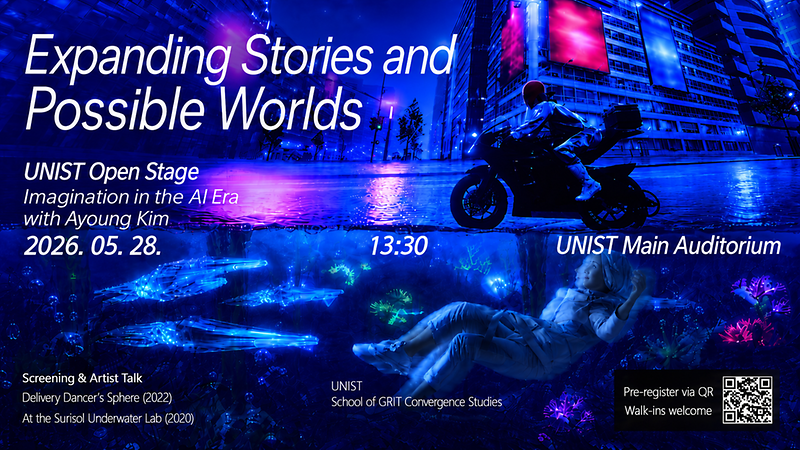
Beyond the Possible: Collaborating Professor Ayoung Kim on Imagination in the AI Era
UNIST Collaborating Professor Ayoung Kim reflects on technology, possible worlds, and the power of asking new questions during the UNIST Open Stage 2.
- News
- JooHyeon Heo
- 2026.05.29
- 48
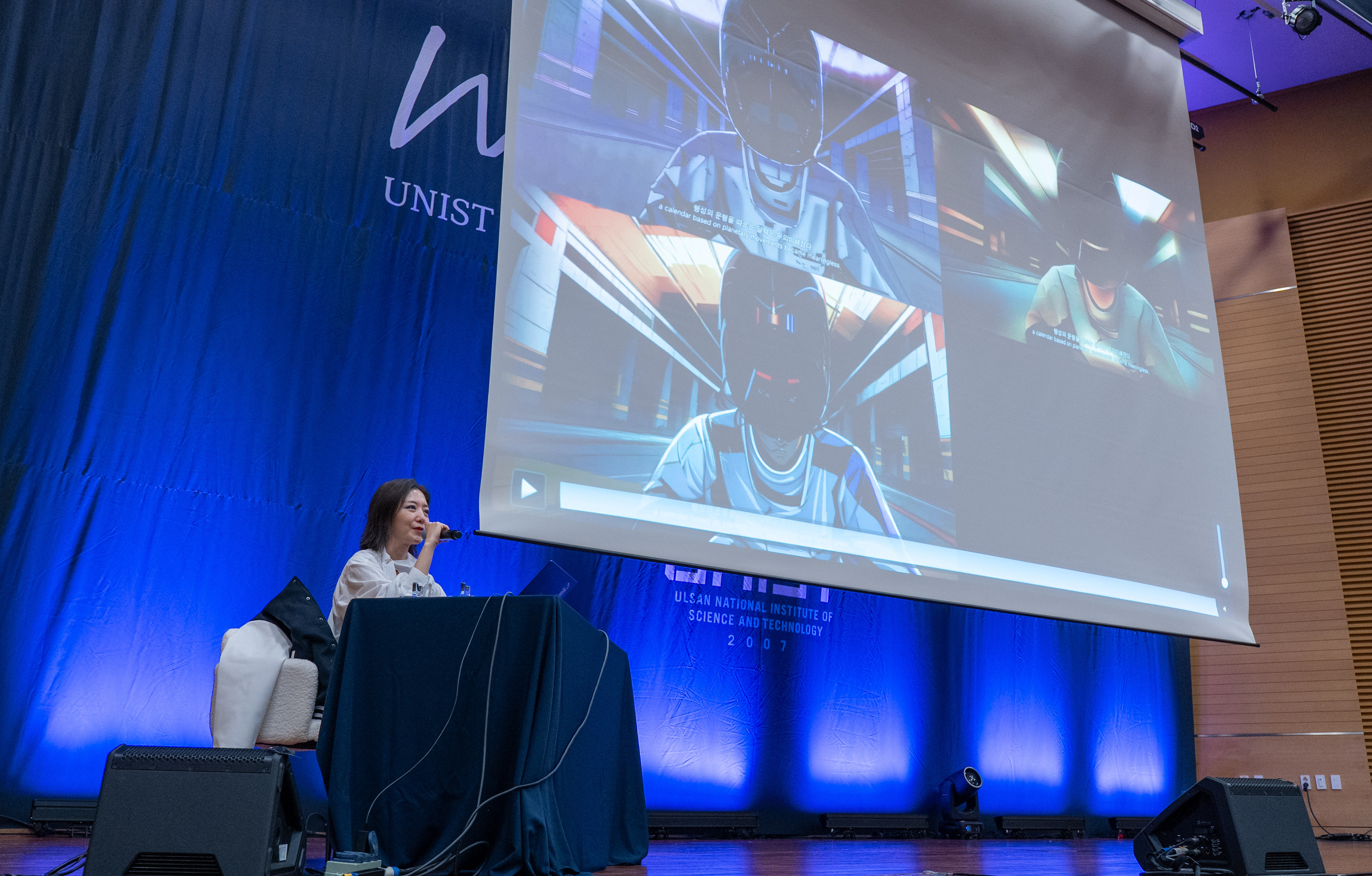
“Imagining possible world is not an escape from reality. Rather, it is a way to see the questions we have missed in the present more clearly.”
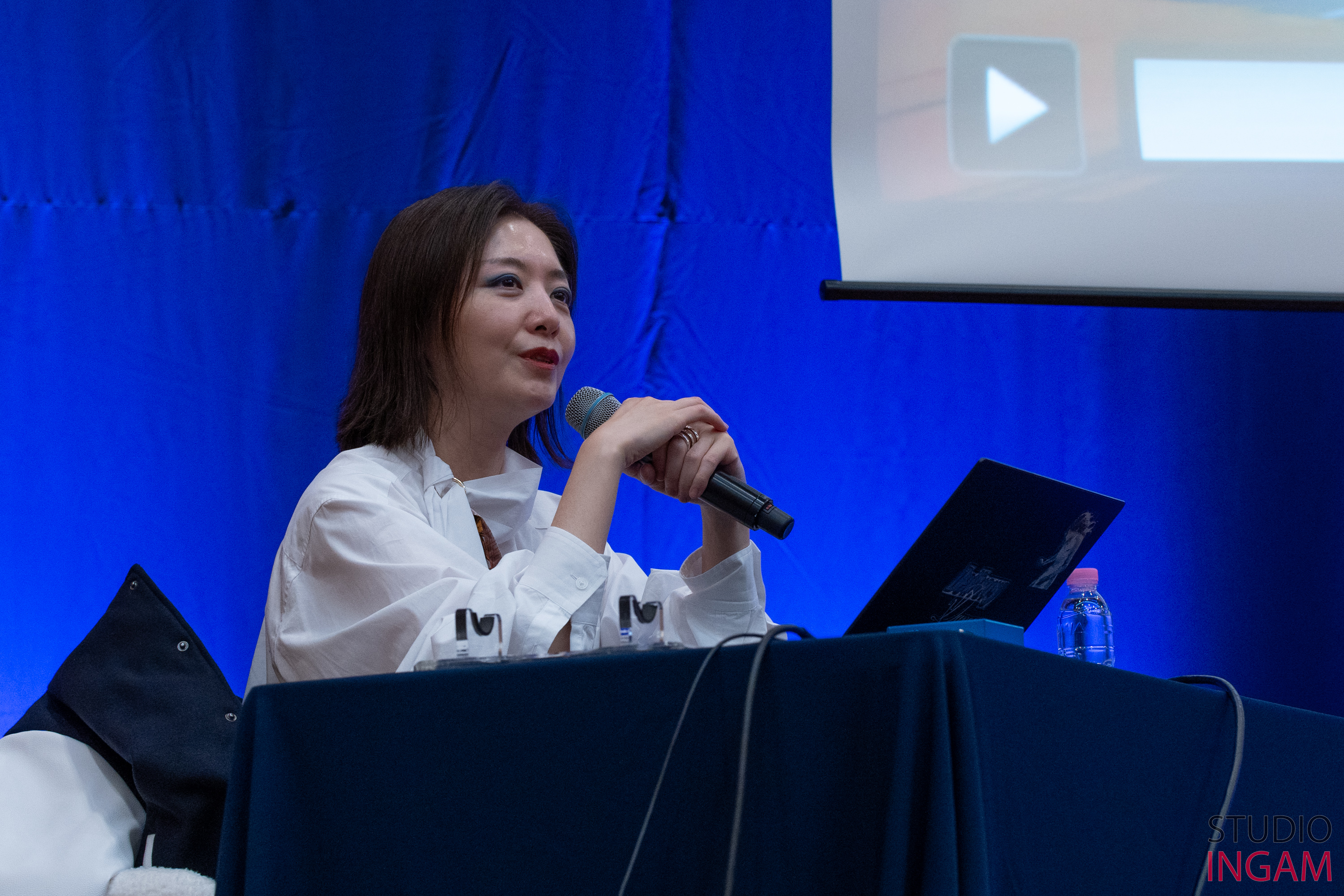
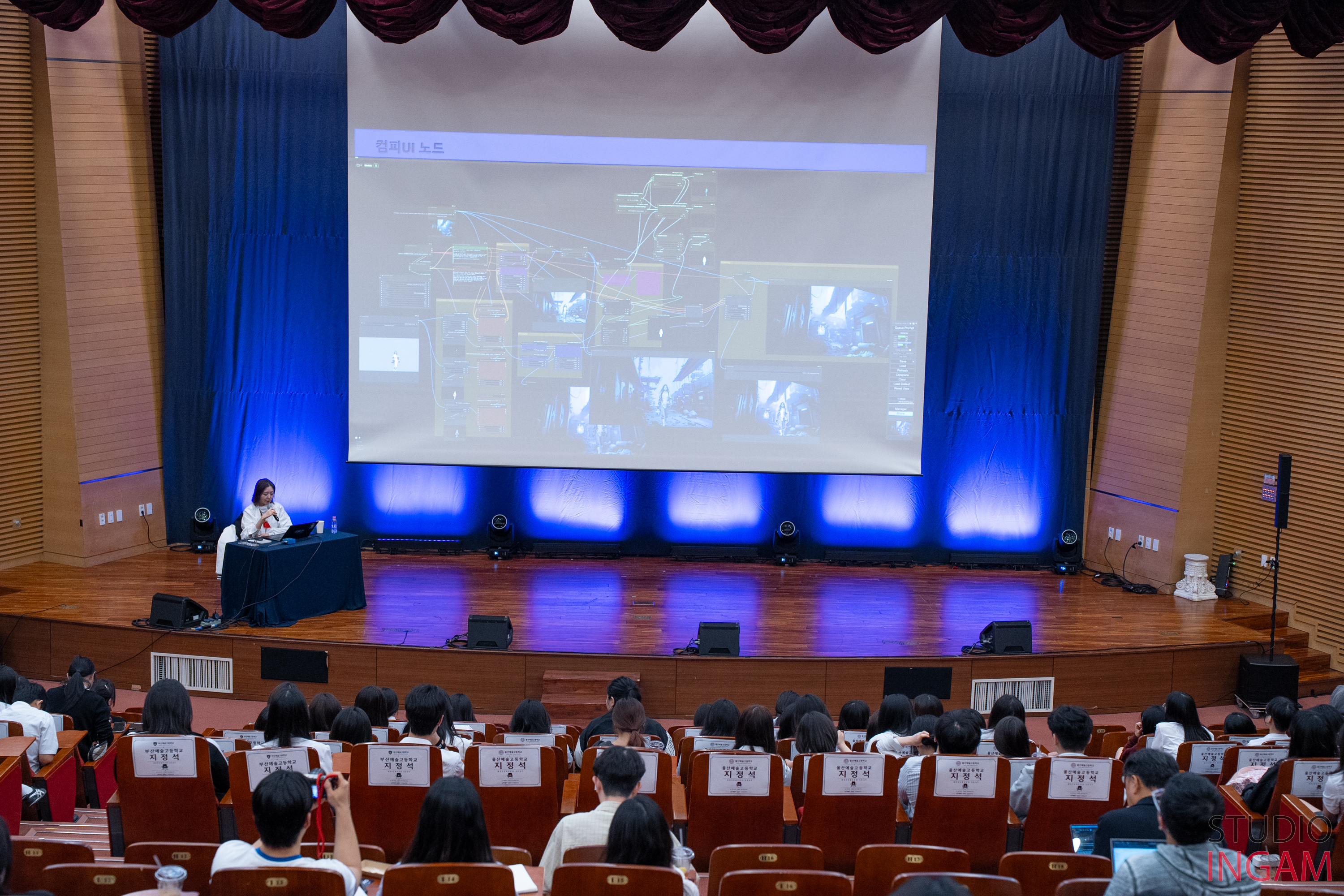
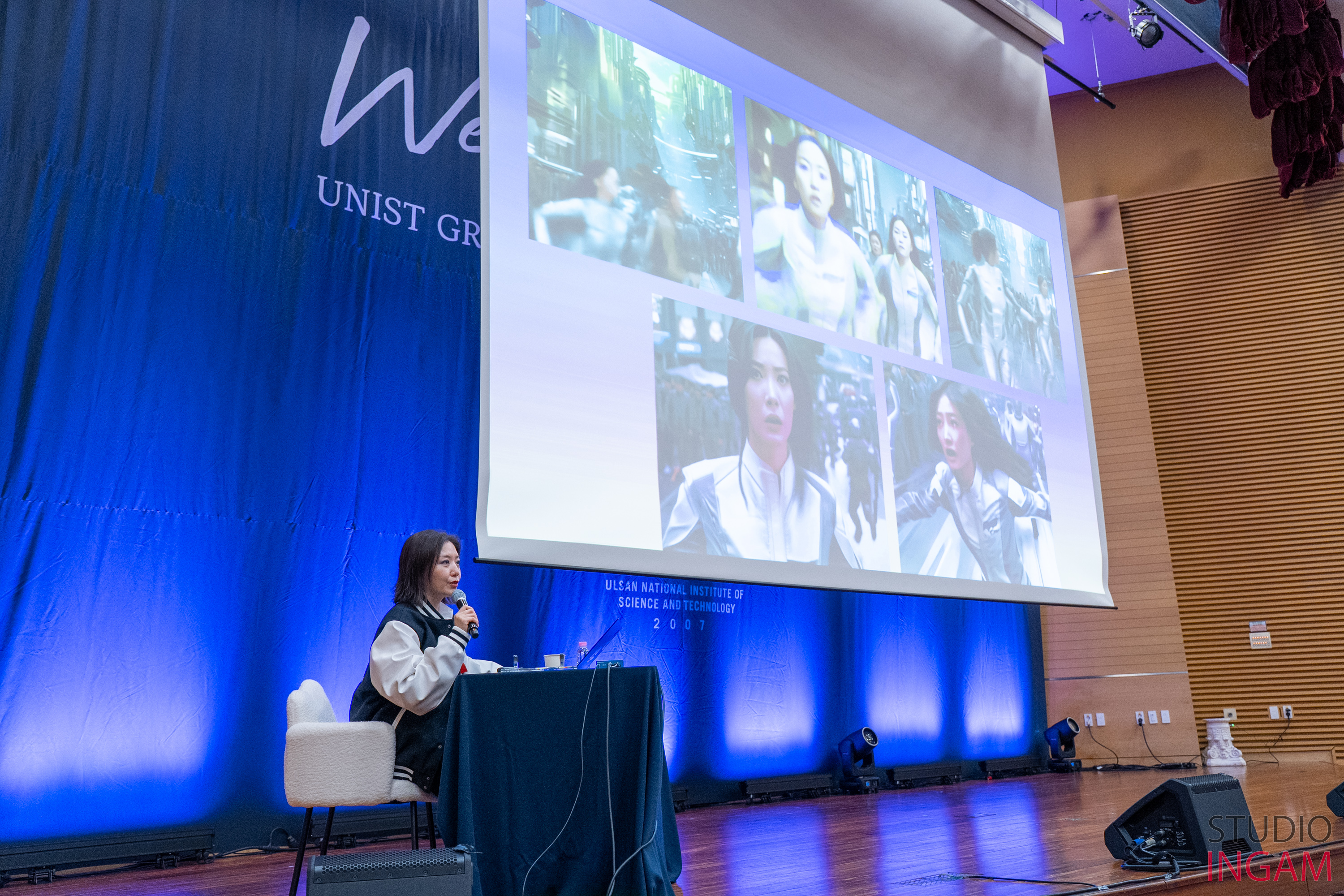
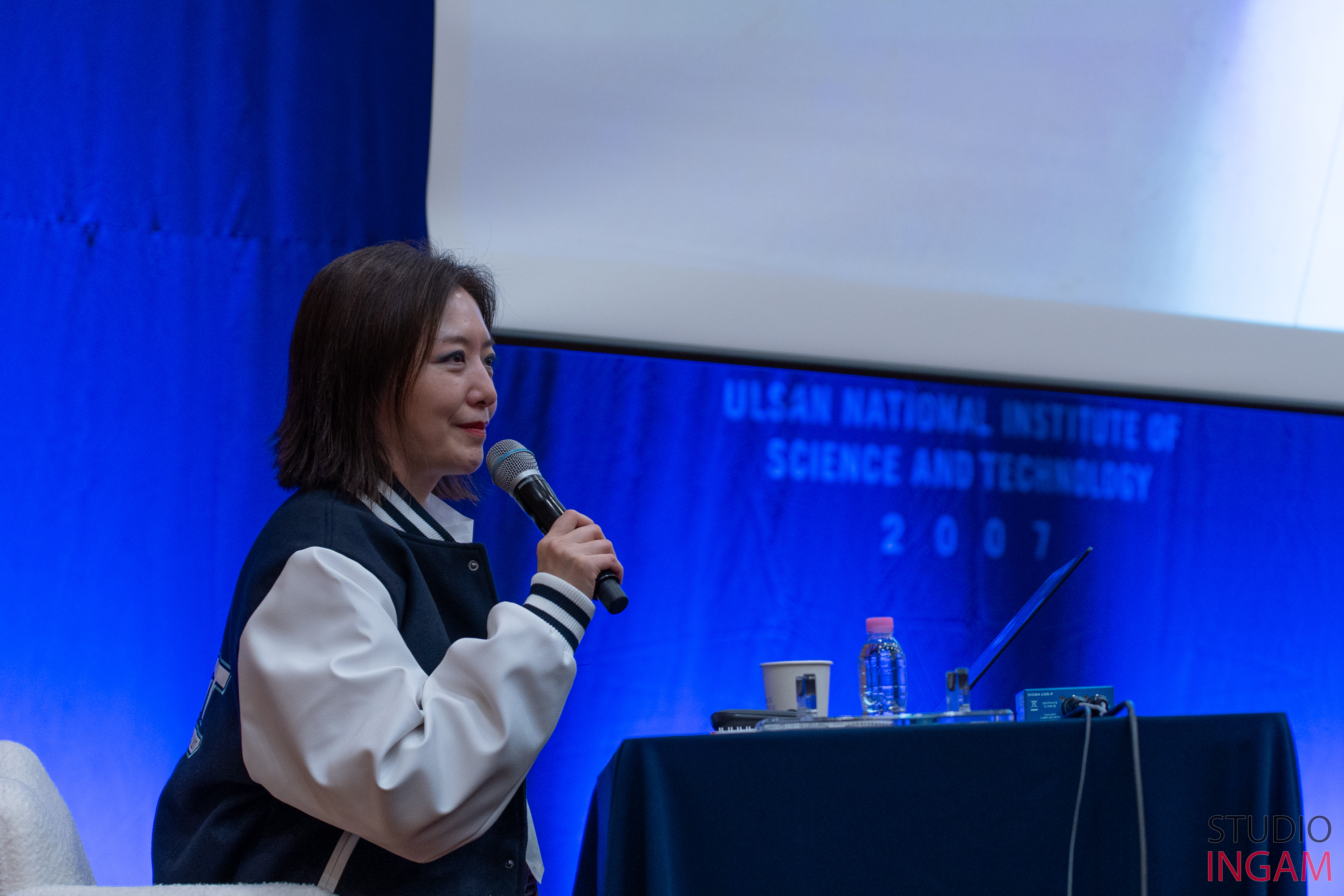
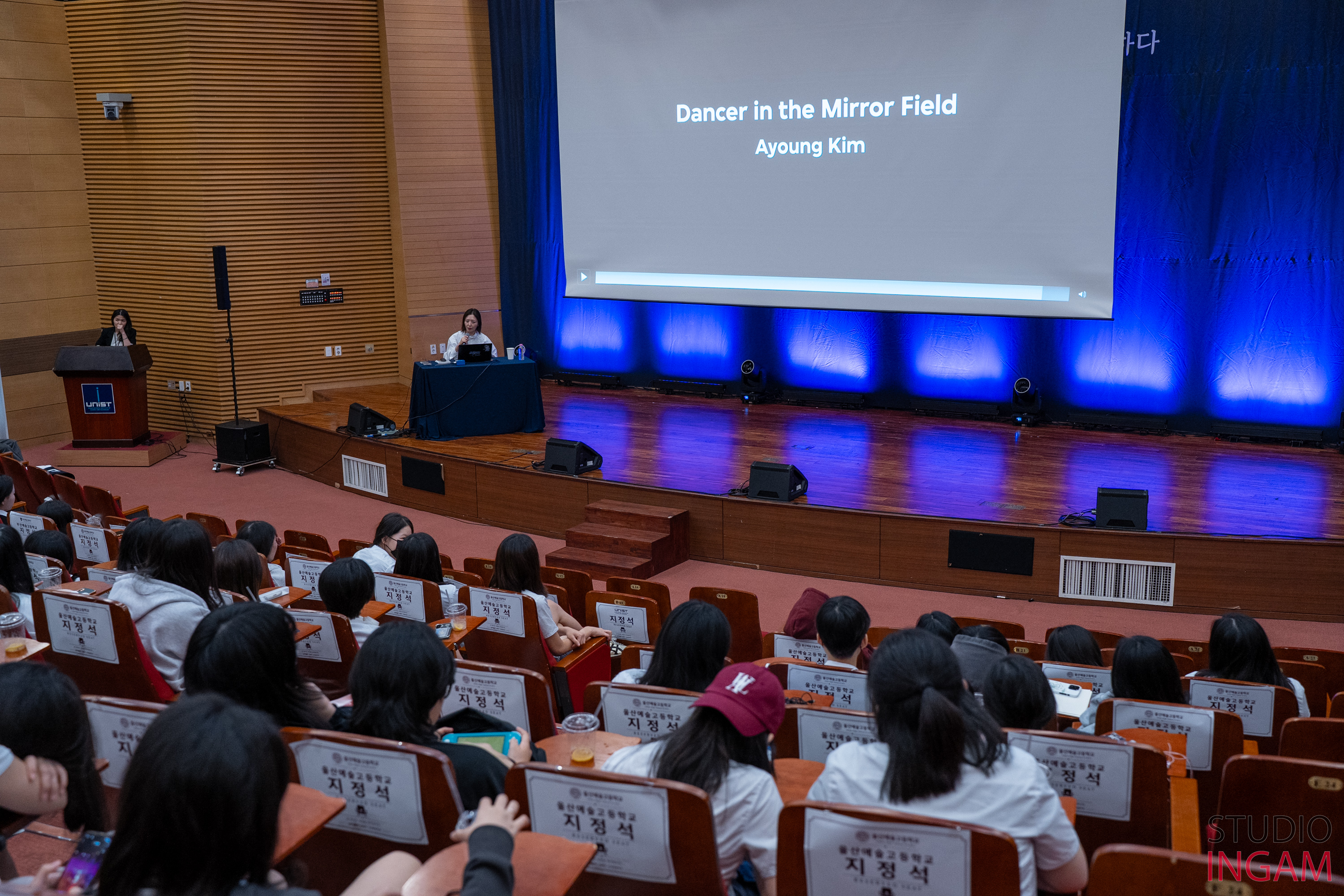
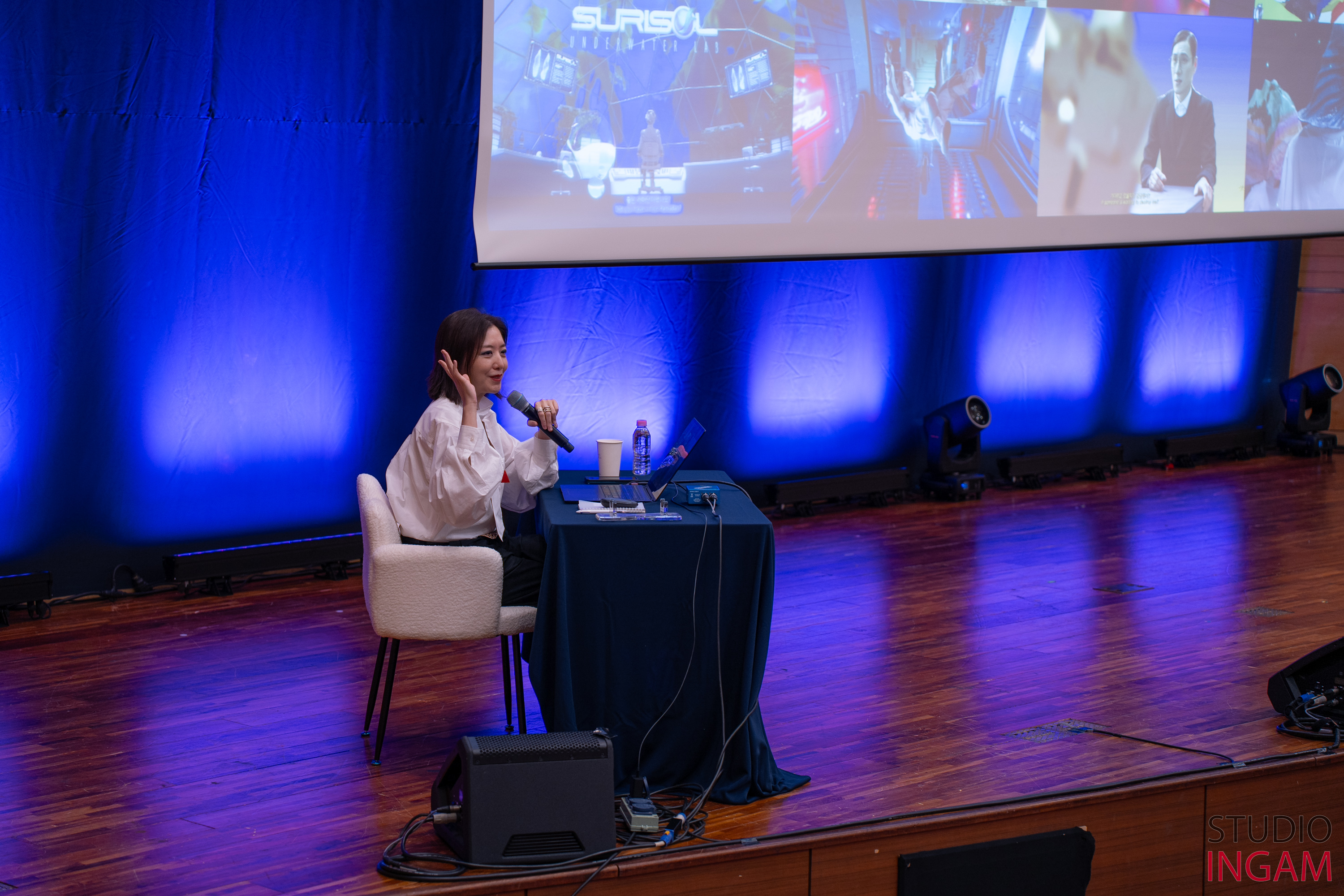
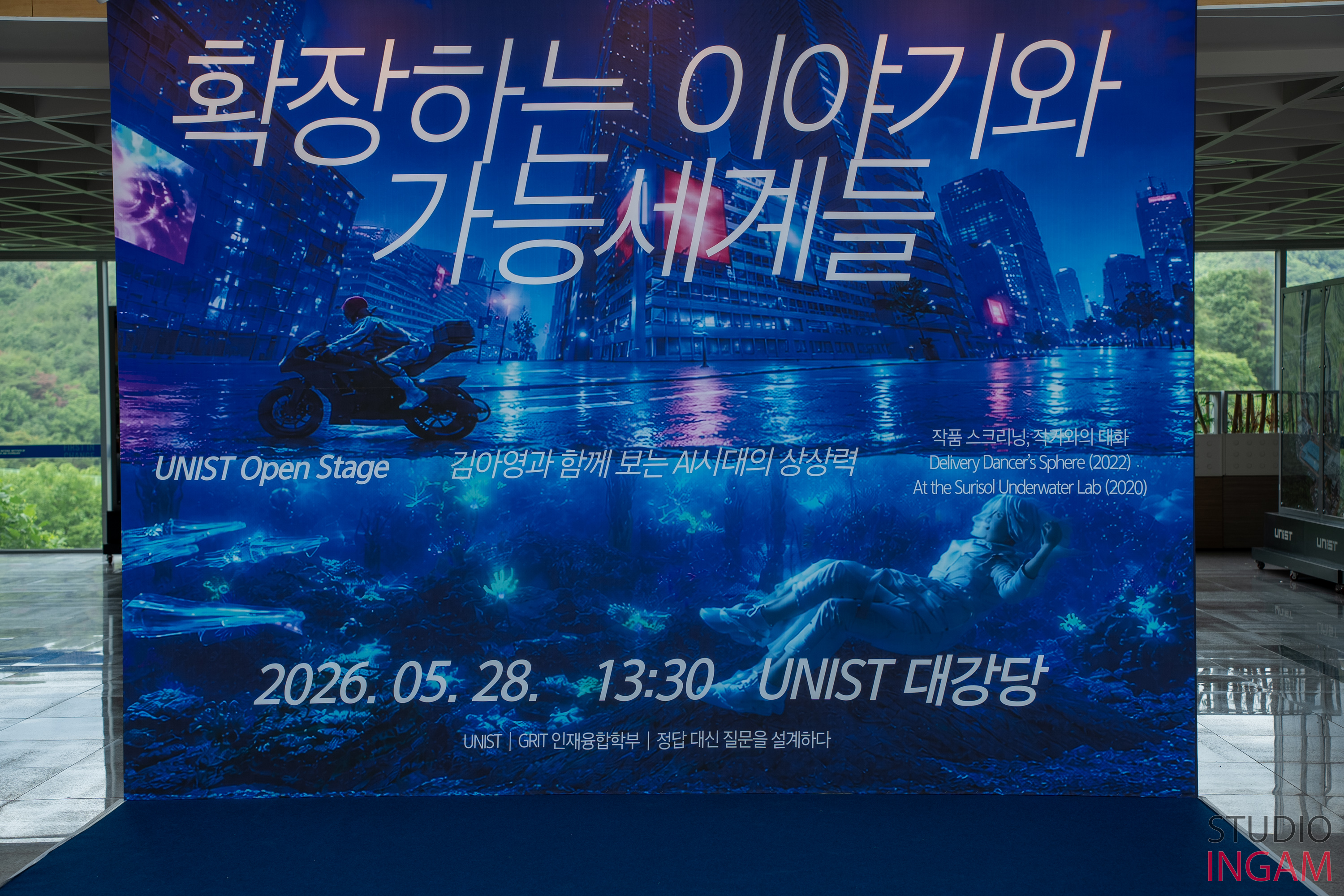
That idea framed the second UNIST Open Stage event on May 28, where internationally acclaimed media artist and UNIST Collaborating Professor Ayoung Kim explored creativity in the AI era through film, conversation, and audience discussion.
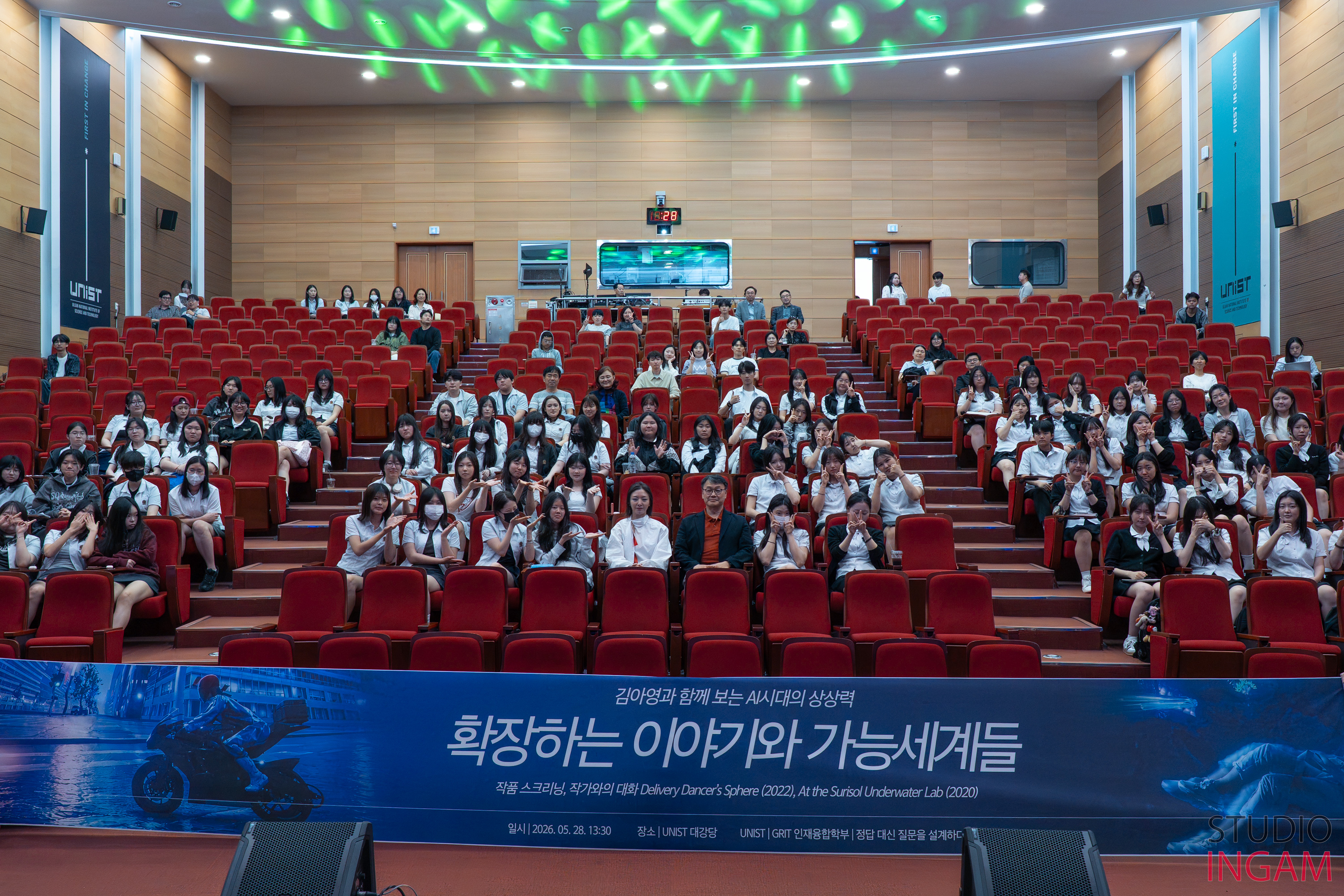
Held at the UNIST Main Auditorium before an audience of about 150 students, faculty members, and guests, the event brought together members of the UNIST community and students from Ulsan High School of Arts and Busan High School of Arts. Titled “Expanding Stories and Possible Worlds: Imagination in the AI Era with Media Artist Ayoung Kim,” the program featured screenings of Professor Kim’s major works, Delivery Dancer’s Sphere (2022) and At the Surisol Underwater Lab (2020), followed by an artist talk and Q&A.
Across the two works, Professor Kim examined how technology reshapes the conditions of human life, in particular, how people move, work, remember, survive, and make choices.
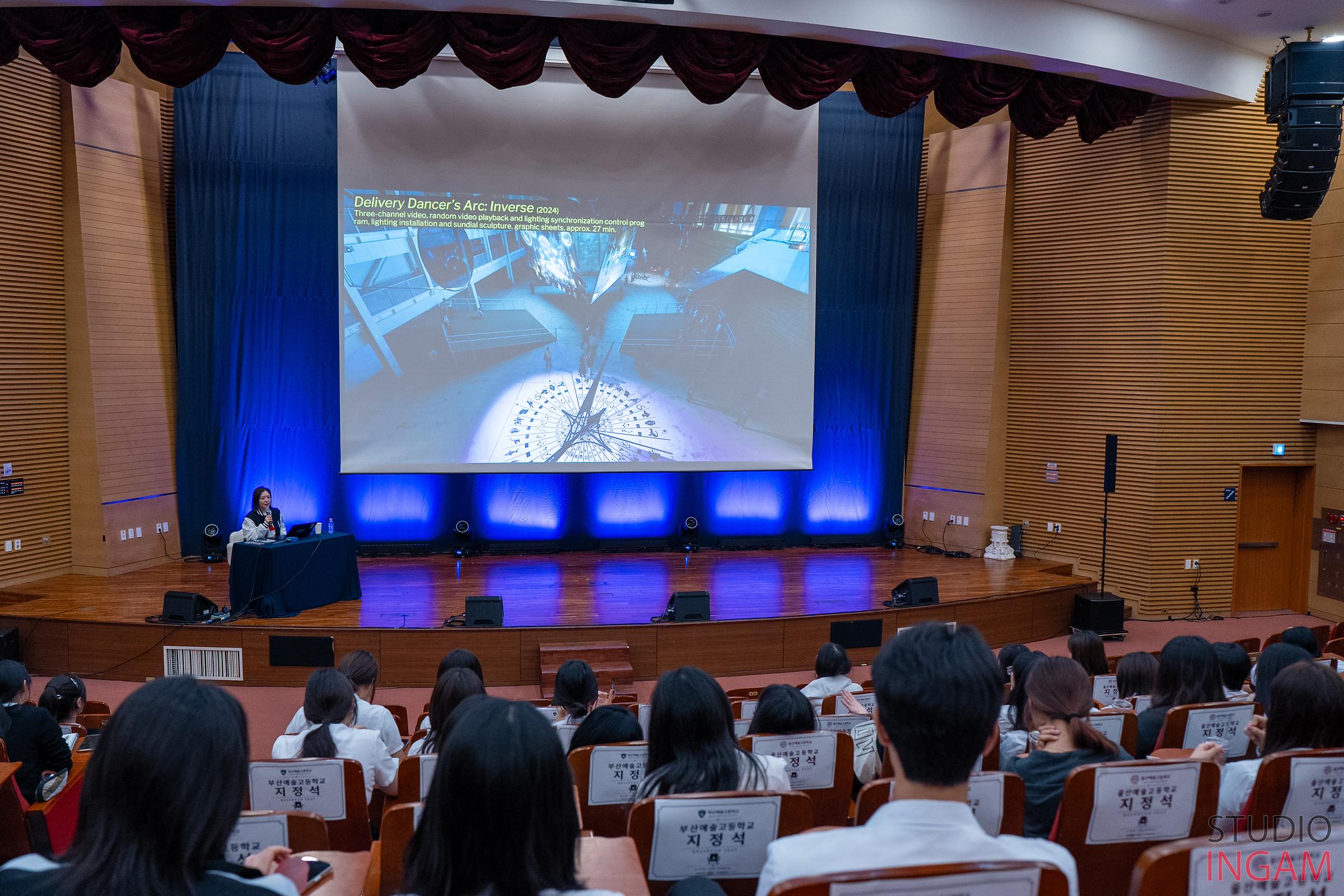
Delivery Dancer’s Sphere imagines a fictional Seoul governed by platform algorithms, following a top-ranked delivery rider through a city where speed and efficiency define value. At the Surisol Underwater Lab moves to a near-future underwater research facility off Oryukdo Island in Busan, where a migrant woman researcher and an operating AI system discuss climate crisis, diaspora, and survival after the depletion of fossil fuels.
For Professor Kim, technology is not simply a tool. It is part of the environment that forms human perception, movement, and labor. “In my work, technology changes the conditions of perception, mobility, and labor,” she noted. “Imagining possible worlds is not an escape from reality. It is a way to make the questions we have missed in the present more visible.”
Professor Kim also discussed her Artist-at-Sea residency with the Schmidt Ocean Institute, where she lived aboard a research vessel with deep-sea biologists and engineers. The experience, she said, showed how scientific observation can open new paths for artistic narrative.
“Science reads the world with precision,” Professor Kim said. “Art gives form to the possibilities opened by that observation, often from an unexpected angle. When the two meet, new questions emerge.”
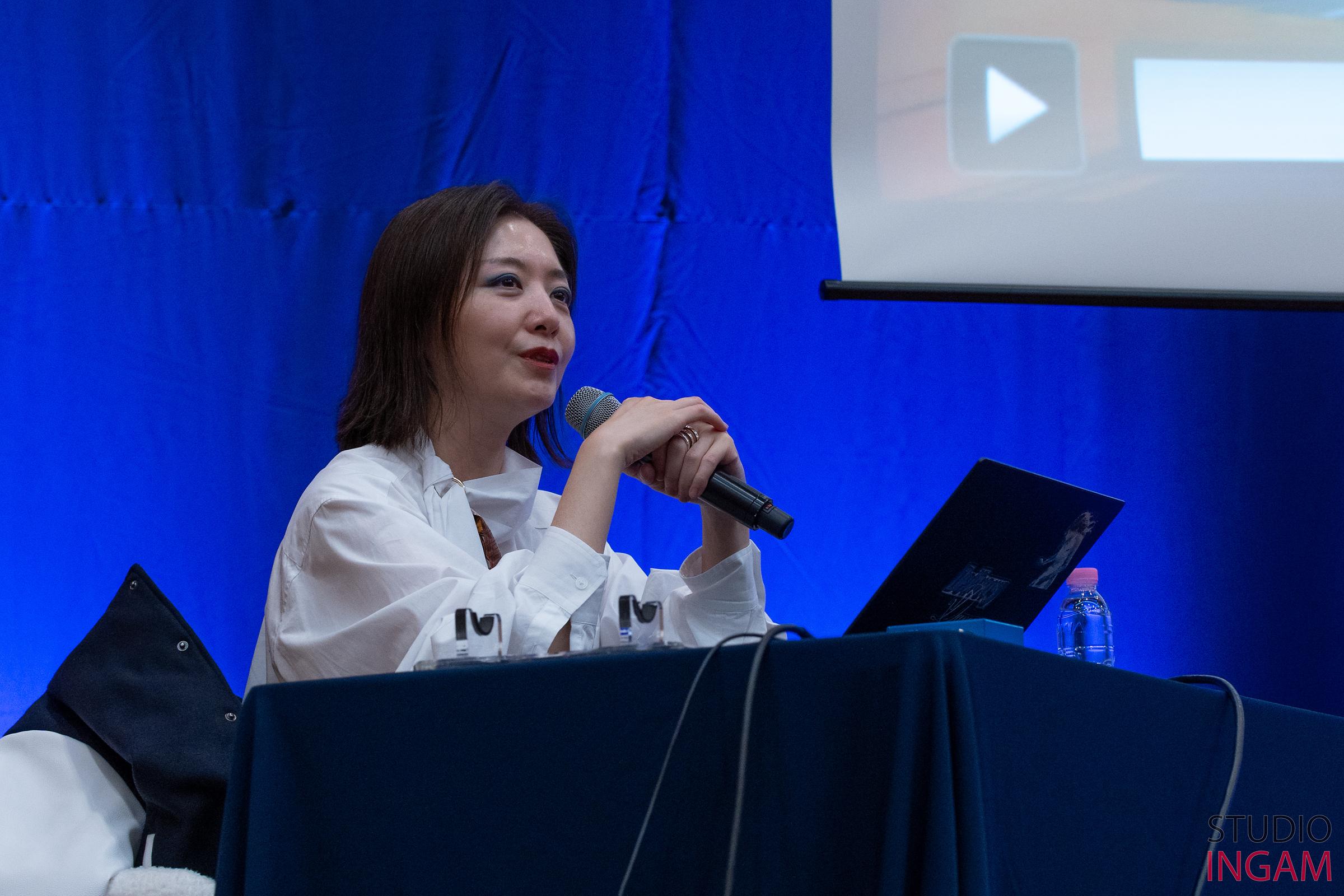
The discussion drew questions from students about AI, speculative world-building, and the process of combining video, narrative, performance, and scientific ideas. One student said the event changed how they understood AI. “I had thought of AI mainly as a tool,” the student said. “But the works showed me that technology can become a condition that changes society and human choice.”
Professor Kim is one of Korea’s leading media artists, working across video, installation, and performance. Her work has been shown at major international venues, including The Museum of Modern Art in New York, Tate, the Venice Biennale, and the Berlin International Film Festival. In 2023, she became the first Korean artist to receive the Prix Ars Electronica Golden Nica. In 2025, she received the LG Guggenheim Award.
For UNIST, the event reflected the educational direction behind the newly established School of GRIT Convergence Studies, which supports students in designing their own academic paths around original questions. Beginning in the 2027 academic year, UNIST plans to admit around 10 students through the GRIT Talent Track.
“Professor Kim’s work shows how science and technology can become the material for possible worlds — and how creativity begins with the courage to ask new questions within them,” said UNIST President Chong Rae Park. “UNIST will continue to help students build the breadth to think across science, art, and the humanities as they take on new research and real-world challenges.”
Related Links
Related Photo