
Alumnus Jonghyun Ko Appointed Assistant Professor at Kunsan National University & Interview
2026.03.04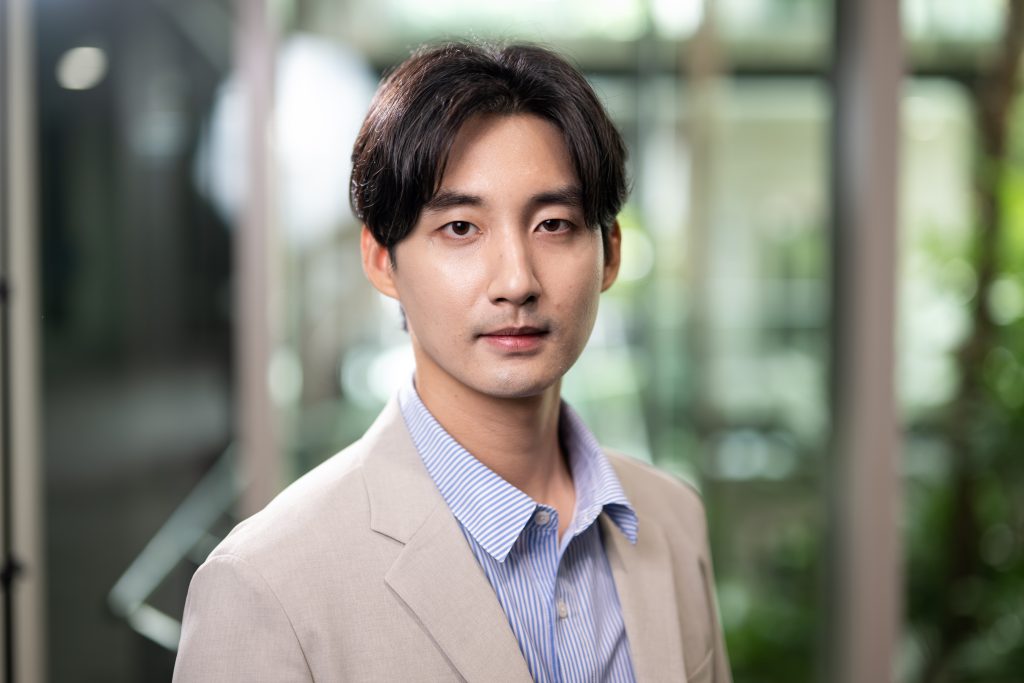
Jonghyun Ko, an alumnus who completed the combined M.S.–Ph.D. program in Industrial Engineering at our university, has been appointed as a tenure-track faculty member (Assistant Professor) in the Department of AI Convergence at Kunsan National University, effective March 2026.
We sincerely congratulate him on this new beginning and look forward to his distinctive, interdisciplinary research journey ahead!
1. Please introduce yourself.
Hello, I’m Jonghyun Ko, newly appointed as a tenure-track faculty member (Assistant Professor) in the Department of AI Convergence at Kunsan National University as of March 2026. After completing the integrated M.S.–Ph.D. program at UNIST, I worked as a postdoctoral researcher at the Free University of Bozen-Bolzano (unibz) in Italy under Professor Fabrizio Maria Maggi, a world-renowned authority in process mining. I later served as academic staff in the Information Systems School at Queensland University of Technology (QUT) in Australia, gaining experience across both theory and practice.
During my time abroad, I broadened my perspective through collaborative research with leading scholars, including Professor Wil van der Aalst—the founder of process mining (ranked #1 in the field on Google Scholar)—and Professor Arthur ter Hofstede (ranked #5 in the field on Google Scholar). I am currently recognized as a leading global researcher in log-data anomaly detection (e.g., financial fraud, hacking). Now, building on the global network and experience I have accumulated, I hope to contribute to the advancement of Korea’s AI industry.
2. Why did you want to become a professor?
When I was in high school, my dream was to win the Fields Medal, often called the “Nobel Prize of mathematics.” Naturally, I came to envision a life in academia and a career as a professor. During my Ph.D. program, I came to deeply appreciate the joy of research itself, and I set a new goal for my life: to become a scholar who continues doing research even beyond the age of 100. I pursue my work every day with excitement, hoping that what I create will provide meaningful value for future generations.
3. What is the biggest lesson you learned in your research journey, and how do you overcome difficulties?
As an undergraduate research assistant, even before AI became the spotlight it is today, I was fascinated by solving mathematical challenges with computers, which led me down this path. However, after entering graduate school, I found myself overwhelmed by the excellence of my advisor and began to doubt my own capabilities. By the third year of the integrated program, I hit such a major wall that I even considered leaving the program.
What helped me stand back up was my advisor’s trust and support—he believed in me and encouraged me not to give up. Determined to repay that faith, I focused on accomplishing “small goals” one by one. That sense of achievement grew like a snowball, and ultimately I was able to graduate with results that surpassed my own expectations. The greatest lesson I learned is this: rather than being crushed by overly large goals, use today’s small accomplishments as your driving force.
4. Could you share your experience throughout the faculty hiring process?
I used to struggle with interviews due to stage fright, but I overcame it through thorough, tailored preparation. For the teaching demonstration, instead of using conventional slides, I prepared specialized materials in a “hands-on practice and development” format that I created specifically for the department. I also presented a concrete industry–academia collaboration plan that reflected the university’s geographical and regional characteristics, which I believe conveyed my genuine interest and commitment.
In particular, as an industrial engineering major, I had extensive experience carrying out various industry–academia projects, which aligned well with Kunsan National University’s industry-focused academic culture. I think a key factor was demonstrating “interdisciplinary capability”—the ability to collaborate beyond my primary field with a wide range of experts.
5. What are your research directions and goals?
I feel the greatest fulfillment not from following well-trodden paths, but from choosing relatively unexplored, non-mainstream areas and helping them grow into mainstream fields. Over the next five years, I plan to focus on developing “DNA sequence repair AI models for disease and cancer treatment.” I look forward to the synergy created by combining my recently published sequence repair algorithm (P-BEAR-RL, a state-of-the-art SOTA model in this area) with the biomedical domain.
Carrying forward my advisor’s philosophy—“Always maintain two or three research lines and keep learning continuously”—I aim to become a scholar who does not merely chase trends, but integrates multiple disciplines and pioneers new trends.
6. Any final words for juniors?
Life is ultimately about “My Way.” Rather than being swayed by others’ opinions or whatever field happens to be popular, I hope you will quietly and steadily walk the path you truly want. Just as AI once was, some areas may look non-mainstream or seem difficult for employment right now—but if you have the mindset to carve out that path yourself, nothing is impossible. Sincere effort never betrays you. I will always be cheering for your dreams. Fighting!